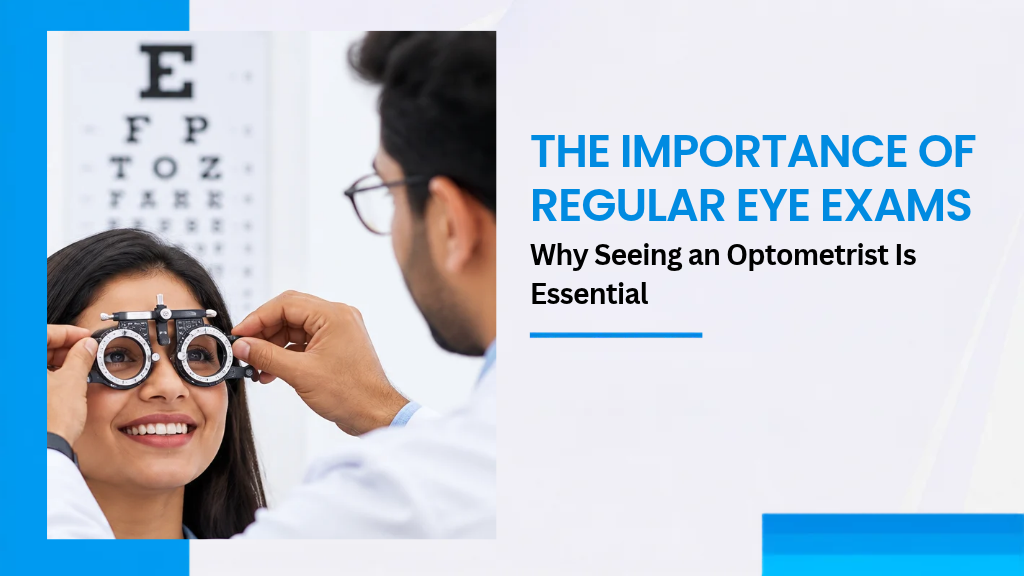
Regular eye exams play an important role in maintaining healthy vision and protecting your eye health. Many people visit an optometrist only when they notice blurred vision or other problems. However, some eye conditions can develop without obvious symptoms.
A routine eye examination can help identify changes in your vision and detect signs of certain eye conditions at an early stage. It can also help determine whether you need glasses, contact lenses or further specialist assessment.
In this blog, we explain why regular eye exams matter, what happens during an eye test and how they can help you look after your vision.
Why Are Regular Eye Exams Important?
Regular eye exams are not just about checking whether you need glasses. They also help assess the health of your eyes and identify potential concerns.
1. Early Detection of Eye Conditions
Some eye conditions, including glaucoma, cataracts and age-related macular degeneration, may develop gradually without noticeable symptoms in the early stages.
Routine eye examinations can help identify signs of these conditions before you notice changes in your vision. Early detection may allow you to receive appropriate advice, monitoring or treatment.
For example, glaucoma can damage the optic nerve and cause permanent vision loss if it is not managed. Regular eye checks can help identify signs that may require further investigation by an ophthalmologist.
2. Monitoring Eye Health and General Health
An eye examination may reveal changes in the blood vessels or other structures inside the eye that could be associated with certain health conditions, including diabetes and high blood pressure.
If an optometrist notices anything unusual, they may recommend further assessment or refer you to another healthcare professional.
It is important to remember that a routine eye exam does not replace general health checks or specific screening tests. For example, people with diabetes should also attend their recommended diabetic eye screening appointments.
3. Identifying Vision Problems
Refractive errors, such as short-sightedness (myopia), long-sightedness (hyperopia) and astigmatism, can affect how clearly you see.
An eye examination can help identify these problems and determine whether glasses or contact lenses may improve your vision.
Having the correct prescription can make everyday activities such as reading, driving, working and using digital devices more comfortable.
What to Expect During an Eye Exam
A comprehensive eye examination may include several tests, depending on your age, symptoms, medical history and individual needs.
1. Visual Acuity Test
This test measures how clearly you can see at different distances. You may be asked to read letters or symbols from an eye chart.
The results help determine whether you have a refractive error and whether you may need glasses or a change in your prescription.
2. Pupil Reaction Test
Your optometrist may check how your pupils respond to light. This helps assess certain aspects of pupil function and the neurological pathways involved in vision.
3. Examination of the Eye
Your optometrist may examine the structures at the front and back of your eyes, including the retina and optic nerve.
Depending on your needs, eye drops may be used to widen your pupils and allow a clearer view of the back of the eye. These drops can temporarily blur your vision and make bright light uncomfortable.
4. Eye Pressure Measurement
Your eye pressure may be measured as part of the examination, particularly when assessing your risk of glaucoma.
Eye pressure is only one part of a glaucoma assessment. Further tests may be needed if there are concerns about your optic nerve or visual field.
5. Advanced Diagnostic Tests
Depending on your eye health and symptoms, additional tests may be recommended.
Optical Coherence Tomography (OCT) is a non-invasive scan that produces detailed images of the retina and other structures at the back of the eye. It can help assess and monitor conditions such as macular disease and diabetic retinopathy.
Not every patient needs every test. Your optometrist will recommend assessments based on your individual needs.
How Often Should You Have an Eye Exam?
The frequency of eye examinations depends on your age, eye health, medical history and risk factors.
In the UK, the NHS generally recommends having an eye test at least every two years. Your optometrist may advise more frequent examinations if you have certain eye conditions, a family history of eye disease or other risk factors.
If you notice changes in your vision or develop new eye symptoms, do not wait until your next routine appointment. Arrange an assessment with an appropriate eye care professional.
When Should You Book an Eye Examination?
You should consider booking an eye examination if:
- You are experiencing blurred or changing vision.
- You have difficulty reading or seeing objects clearly.
- You are experiencing frequent eye strain or headaches.
- You have a family history of certain eye conditions.
- You have diabetes or another condition that may affect your eye health.
- You have concerns about your vision or eye health.
If you experience sudden vision loss, severe eye pain or a sudden change in your vision, seek urgent medical attention rather than waiting for a routine eye appointment.
Consultant-Led Eye Care at Dr MM Eye Care
Looking after your eyes involves more than checking how clearly you can see. Understanding your symptoms, medical history and individual risk factors is an important part of eye care.
At Dr MM Eye Care, Mr Manu Mathew is a Consultant Ophthalmic Surgeon providing personalised eye care and treatment.
If an eye examination identifies a concern that may require specialist assessment, an ophthalmologist can help explain the findings and discuss appropriate next steps.
You can learn more about Dr MM Eye Care and its approach to consultant-led eye care.
Take the Next Step
Regular eye examinations can help you stay informed about your vision and eye health. Even if your eyesight seems normal, routine checks may identify changes that need attention.
If you have concerns about your eyes or would like to discuss your eye health, visit Dr MM Eye Care to learn more about the practice and available care.
Conclusion
Regular eye exams are an important part of maintaining healthy vision and monitoring your eye health. They can help identify vision changes, detect signs of certain eye conditions and determine whether further assessment is needed.
You do not have to wait until you notice a problem to take care of your eyes. Following the recommended eye examination schedule and seeking advice when symptoms arise can help you make informed decisions about your eye health.
If you have concerns about your vision, speak to an appropriate eye care professional for advice.
Author: Mr Manu Mathew, Consultant Ophthalmic Surgeon