
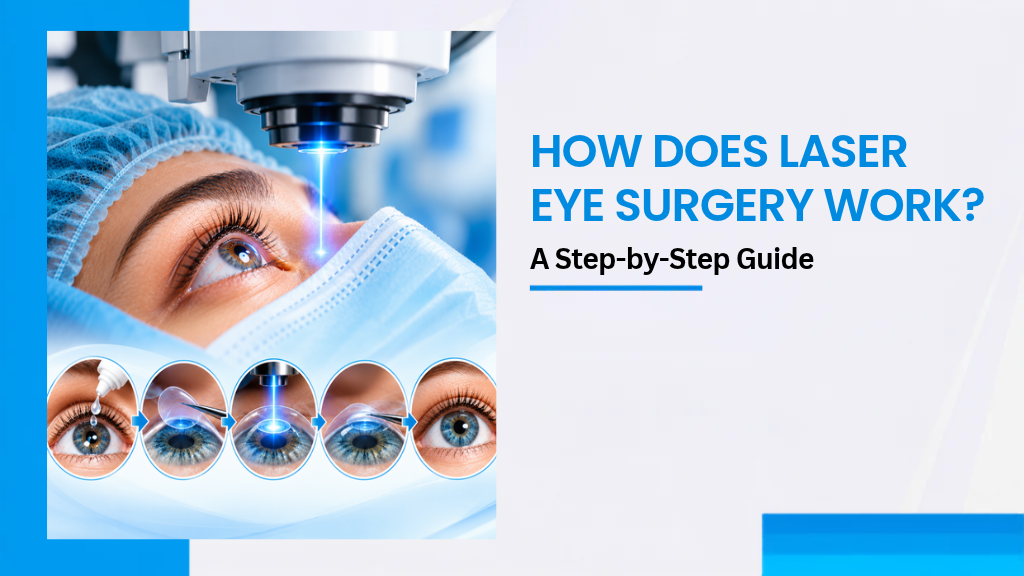
For many people, laser eye surgery is about more than simply improving their vision. It can reduce dependence on glasses or contact lenses and make everyday activities such as driving, exercising, travelling, working and enjoying hobbies more convenient.
If you are considering treatment, it is natural to have questions:
- How does laser eye surgery actually work?
- Which type of laser eye surgery might be suitable for me?
- What happens during the procedure?
- Is laser eye surgery painful?
- How long does recovery take?
- What results can I realistically expect?
In simple terms, laser eye surgery uses precise laser technology to reshape the cornea, the transparent front surface of the eye. By changing its shape, the way light is focused onto the retina can be improved, helping to correct certain refractive errors.
However, the laser is only one part of the treatment journey. A detailed assessment, careful treatment planning and choosing the appropriate procedure are equally important.
This guide explains how laser eye surgery works, step by step, from your initial consultation through treatment, recovery and long-term results.
What Is Laser Eye Surgery?
The cornea plays an important role in focusing light as it enters the eye. When the shape or length of the eye causes light to focus incorrectly, a refractive error can occur.
Common refractive errors include:
- Myopia (short-sightedness): Distant objects may appear blurred.
- Hyperopia (long-sightedness): Close objects may be more difficult to focus on.
- Astigmatism: An irregularly shaped cornea can cause blurred or distorted vision.
Glasses and contact lenses correct these focusing problems externally.
Laser eye surgery works differently. It carefully changes the shape of the cornea so that incoming light can be focused more accurately within the eye.
The aim is to provide clearer unaided vision and, for suitable patients, reduce dependence on glasses or contact lenses.
Learn more about Laser Vision Correction at Dr MM Eye Care
What Vision Problems Can Laser Eye Surgery Correct?
Laser vision correction can treat certain levels of:
Myopia
With myopia, light is focused in front of the retina. Laser treatment changes the shape of the cornea to help move the point of focus towards the retina.
Hyperopia
With hyperopia, light may be focused behind the retina. A different corneal reshaping pattern can alter the focusing power of the cornea.
Astigmatism
Astigmatism occurs when the cornea has an uneven curvature. Laser treatment can modify the corneal shape to improve the way light is focused.
The amount and type of correction possible depends on factors such as your prescription, corneal characteristics and overall eye health.
What Are the Different Types of Laser Eye Surgery?
Laser eye surgery is not a single procedure. Different techniques are available, and the most appropriate option depends on the individual characteristics of your eyes.
The commonly used approaches include LASIK, LASEK and PRK.
Procedure | How it works | General recovery |
LASIK | A thin flap is created in the cornea before the underlying tissue is reshaped with a laser. The flap is then repositioned. | Usually quicker early visual recovery |
LASEK | The surface layer of the cornea is moved aside before the underlying tissue is reshaped. | Generally slower surface healing |
PRK | The surface layer is removed before the underlying corneal tissue is reshaped. | Surface healing takes longer |
There is no single laser eye surgery procedure that is best for everyone. Your prescription, corneal shape and thickness, eye health, lifestyle and visual requirements all need to be considered before choosing a treatment.
Who Is Suitable for Laser Eye Surgery?
Not everyone who wears glasses or contact lenses is automatically suitable for laser vision correction.
Your consultant may consider:
- Your age
- Your current prescription
- Whether your prescription is stable
- The thickness and shape of your cornea
- The health of your eyes
- Your tear-film and dry-eye status
- Your general health
- Your lifestyle and occupation
- Your visual requirements
- Your expectations from treatment
Certain eye conditions or individual circumstances may mean that laser eye surgery is not the most appropriate option.
Having a prescription that can technically be corrected does not automatically mean laser eye surgery is the right choice for you.
The purpose of your assessment is therefore not simply to determine whether surgery is possible, but whether it is appropriate for your individual eyes, visual needs and long-term expectations.
What Happens During Your Laser Eye Surgery Consultation?
Your consultation and assessment are important parts of the treatment journey.
A laser eye surgery consultation is more than a standard eye test. Detailed diagnostic testing helps your consultant understand the structure, health and optical characteristics of your eyes.
Your assessment may include:
- Your refractive prescription
- Corneal shape and curvature
- Corneal thickness
- Pupil characteristics
- Overall eye health
- Tear-film and ocular-surface health Your consultant will also discuss:
- Why you are considering treatment
- Your work and hobbies
- Your lifestyle
- Your expectations
- Any concerns about surgery
- How much independence from glasses or contact lenses you hope to achieve
Why Is This Assessment Important?
The aim is not simply to determine whether laser surgery can be performed. It is to establish:
Is laser eye surgery the right choice for your eyes, your lifestyle and your long-term visual needs?
If treatment is appropriate, your consultant can discuss which procedure may be suitable and what you can realistically expect.
If laser surgery is not appropriate, the assessment can also help identify whether another form of vision correction may be more suitable.
Laser Eye Surgery Step by Step
Once you have been assessed as suitable for treatment and a procedure has been selected, the treatment journey generally follows several stages.
Step 1: Preparing for Treatment
You will receive instructions about how to prepare for your procedure. Depending on your circumstances, this may include:
- Following advice about contact lens wear
- Using recommended eye drops
- Avoiding certain eye or facial products when advised
- Arranging transport home
- Reviewing your post-operative instructions
- Understanding what to expect during recovery
This is also a good opportunity to ask any questions before treatment.
Step 2: What Happens During the Laser Eye Surgery Procedure?
On the day of surgery, your identity, treatment plan and relevant measurements will be checked before treatment begins.
Anaesthetic eye drops are generally used to numb the surface of the eye.
The exact surgical steps depend on the procedure selected. For example, LASIK involves creating a thin corneal flap, while LASEK and PRK are surface-based procedures.
Once the cornea has been prepared, the laser carefully reshapes the required corneal tissue according to your individual treatment plan.
Step 3: How Does the Laser Reshape the Cornea?
This is the central principle behind how laser eye surgery works.
Think of the cornea as one of the eye’s main focusing surfaces. If its shape causes light to focus incorrectly, vision can become blurred.
Laser vision correction carefully changes the profile of the cornea so that incoming light can be focused more accurately onto the retina.
The pattern of correction depends on the refractive error being treated.
The treatment is planned around your individual eye measurements rather than using a one-size-fits-all approach.
Step 4: What Happens Immediately After Surgery?
Once treatment has finished, you will receive instructions for the early recovery period. Your vision may not feel completely settled immediately afterwards.
Depending on the procedure and your individual healing response, you may temporarily experience:
- Blurred or hazy vision
- Watery eyes
- Mild irritation
- Light sensitivity
- A gritty sensation
- Glare or halos around lights
These symptoms can occur during the early healing period, but your consultant will explain what is expected with your particular procedure.
You should not drive yourself home after treatment, so transport should be arranged beforehand.
Is Laser Eye Surgery Painful?
This is one of the most common concerns patients have.
Anaesthetic eye drops are used to numb the surface of the eye and minimise discomfort during treatment.
You may be aware of pressure, touch or unusual sensations during certain stages of the procedure.
After treatment, temporary irritation, watering, sensitivity or discomfort can occur as the eyes begin to heal.
Your consultant will explain what you are likely to experience with the specific procedure recommended for you.
How Long Does Laser Eye Surgery Take?
The laser treatment itself is generally relatively brief. However, you should expect to spend longer at the clinic because your visit includes preparation, checks, the procedure and post-treatment advice.
The total time will depend on the treatment being performed and your individual circumstances.
It is therefore better to think of laser eye surgery as a complete treatment journey rather than simply the few minutes during which the laser is used.
Laser Eye Surgery Recovery and Aftercare
Recovery varies between patients and depends on the procedure performed.
Some people notice improvements in their vision relatively quickly, while others need more time before their eyesight becomes stable.
During recovery, you may be advised to:
- Use prescribed eye drops as instructed
- Avoid rubbing your eyes
- Protect your eyes from irritants
- Temporarily restrict certain activities
- Follow guidance regarding driving
- Follow advice regarding screen use
- Attend scheduled follow-up appointments
Your recovery instructions will depend on your procedure and individual healing response.
Why Is Follow-Up Care Important?
Follow-up is an important part of the overall treatment process.
Your consultant can monitor healing, assess your vision and advise you about when you can gradually return to your normal activities.
Recovery should therefore be viewed as part of your overall treatment journey, rather than something that happens separately after surgery.
When Can I Return to Work, Drive or Exercise?
There is no single recovery timetable for every patient.
The timing depends on the procedure, your occupation, your visual recovery and your individual healing.
Driving: You should arrange transport home following treatment. Do not drive until your vision meets the required standard and your consultant confirms that it is safe to do so.
Returning to work: Some patients may return to work relatively quickly, while others may need more time, particularly if their work involves prolonged screen use, dusty environments or visually demanding tasks.
Exercise and sport: Your consultant will advise when it is appropriate to resume exercise. Swimming, strenuous exercise or contact sports may need to be restricted temporarily during recovery.
For more information about recovery and aftercare, read our guide on What to Expect After Laser Eye Surgery.
What Results Can You Expect From Laser Eye Surgery?
The main aim of laser vision correction is to improve unaided vision and reduce dependence on glasses or contact lenses. However, results vary between individuals.
Factors that can influence the outcome include:
- Your original prescription
- Your eye health
- The procedure performed
- Your corneal characteristics
- Your individual healing response
- Age-related changes over time
Having Realistic Expectations
Laser eye surgery can significantly reduce dependence on glasses or contact lenses for suitable patients, but no procedure can guarantee perfect vision in every situation.
Some people may still require glasses for certain activities.
The aim of your consultation should therefore be to establish what is realistic for your individual eyes rather than promise a particular result.
What Are the Risks and Possible Side Effects?
Like any surgical procedure, laser eye surgery is not completely risk-free.
Some effects are relatively common during the early recovery period and may improve as the eyes heal. These can include:
- Dry or uncomfortable eyes
- Fluctuating vision
- Light sensitivity
- Glare
- Halos around lights
- Temporary blurred or hazy vision
Other possible outcomes can include:
- Residual prescription
- Under-correction or over-correction
- Continued dependence on glasses for some activities
- The possibility of further treatment in selected circumstances Less common complications can also occur.
Your consultant will discuss the potential benefits, limitations and risks relevant to your individual circumstances before you make a decision about treatment.
Understanding these factors is an important part of informed consent and realistic expectations.
Can Laser Eye Surgery Affect Your Everyday Life?
The benefits of laser vision correction are not limited to what can be measured on an eye chart.
For suitable patients, reducing dependence on glasses or contact lenses may make everyday activities more convenient.
This may include:
- Exercising or participating in sport
- Travelling
- Driving
- Working
- Enjoying outdoor activities
- Pursuing hobbies
- Managing situations where glasses or contact lenses are inconvenient
For many patients, the benefit is not simply clearer vision, but greater convenience in everyday life.
Will You Need Glasses Again as You Get Older?
Laser eye surgery changes the shape of the cornea, but it does not stop the natural ageing process of the eye.
As you get older, presbyopia can develop. This is the natural reduction in the eye’s ability to focus on close objects and can eventually result in the need for reading glasses.
Other age-related conditions, including cataracts, can also develop independently of previous laser eye surgery.
Having successful laser vision correction therefore does not mean you will never need glasses again.
It is important to discuss your long-term visual expectations during your consultation.
What If Laser Eye Surgery Is Not Suitable for You?
Not everyone is suitable for laser vision correction.
This may be because of the characteristics of the cornea, eye health, prescription-related factors or other individual circumstances.
If laser surgery is not appropriate, this does not necessarily mean you have no other options. Your consultant can discuss whether another form of vision correction may be more suitable for your eyes and visual needs.
The priority should be choosing the appropriate treatment for you, rather than proceeding with laser surgery simply because it is technically possible.
Why Does Personalised, Consultant-Led Care Matter?
Although the basic principle of laser eye surgery is straightforward, every patient’s eyes are different.
Two people with similar glasses prescriptions may have very different.
- Corneal shapes
- Corneal thicknesses
- Tear-film characteristics
- Eye health
- Visual requirements
- Lifestyle priorities
- Expectations
This is why treatment should begin with detailed diagnostic testing and a careful consultation rather than selecting a procedure based only on your prescription.
At Dr MM Eye Care, a consultant-led assessment considers your eye health, prescription, lifestyle, visual priorities and expectations together when determining whether laser vision correction is appropriate.
The technology used for treatment is important, but careful assessment and treatment planning are also important parts of the patient journey.
Choosing the Right Laser Eye Surgeon
When considering laser eye surgery, it is useful to look beyond the technology or procedure offered.
Factors to consider include:
- The surgeon’s qualifications and experience
- The quality of the diagnostic assessment
- The treatment options available
- Whether treatment is personalised to your eyes
- How risks and realistic outcomes are explained
- The continuity of care provided
- The quality of post-operative follow-up
A good consultation should give you enough information to make an informed decision, including the option not to proceed if treatment is not appropriate.
Conclusion
So, how does laser eye surgery work?
At its core, laser eye surgery uses precise laser technology to reshape the cornea so that light can be focused more accurately within the eye.
However, the laser is only one part of the process. Careful assessment, personalised treatment planning, appropriate procedure selection and structured follow-up are all important parts of the treatment journey.
For suitable patients, laser vision correction can offer clearer functional vision and reduce dependence on glasses or contact lenses.
At Dr MM Eye Care, a consultant-led approach focuses on understanding your individual eyes, lifestyle, visual priorities and long-term expectations before recommending treatment.
The goal is not simply to determine whether laser eye surgery can be done, but whether it is the right choice for you.
Take the Next Step
If you are considering laser eye surgery, a comprehensive consultant-led assessment can help you understand whether treatment is suitable for you and which options may be appropriate for your eyes, lifestyle and visual needs.
Your consultation can help you understand:
- Whether you are suitable for laser vision correction
- Which treatment options may be appropriate
- What happens during the procedure
- What recovery may involve
- The potential benefits and risks
- What visual outcome you can realistically expect
Book a consultation with Dr MM Eye Care to discuss your vision correction options with Mr Manu Mathew, Consultant Ophthalmic Surgeon.
About the Author
Mr Manu Mathew Consultant Ophthalmic Surgeon
MBBS, MS, FRCS (Ed), FRCOphth | GMC Specialist Register
Mr Manu Mathew is a Consultant Ophthalmic Surgeon with over 35 years of experience in ophthalmology. He holds MBBS, MS, FRCS (Ed) and FRCOphth qualifications and specialises in laser vision correction, cataract surgery and refractive eye care.
Frequently Asked Questions
Laser eye surgery uses precise laser technology to reshape the cornea so that light can be focused more accurately onto the retina, helping to correct certain refractive errors.
Anaesthetic eye drops are used to minimise discomfort during treatment. You may experience pressure or unusual sensations during the procedure, while some temporary irritation or discomfort can occur afterwards.
The laser treatment itself is generally brief, although your visit will take longer because it includes preparation, checks and post-treatment care.
Suitability depends on several factors, including your prescription, prescription stability, corneal shape and thickness, eye health, age, dry-eye status, lifestyle and expectations.
LASIK involves creating a thin corneal flap before reshaping the underlying cornea. LASEK and PRK are surface-based procedures. The recovery experience can also differ between procedures.
Recovery varies according to the procedure and individual healing. Some patients experience relatively rapid visual improvement, while others require longer before their vision stabilises.
You should arrange transport home after treatment and should not drive until your vision meets the required standard and your consultant confirms that it is safe.
This varies depending on the procedure, your occupation and your individual recovery. Your consultant will advise you when it is appropriate to return to work.
The aim is to reduce dependence on glasses or contact lenses, but results vary. Some patients may still benefit from glasses for particular activities.
Laser vision correction can treat certain forms and levels of astigmatism by modifying the shape of the cornea. Suitability depends on your individual eye measurements.
Laser eye surgery does not stop the natural ageing process of the eye. Presbyopia can develop with age and may eventually mean that reading glasses are needed.
If laser eye surgery is not appropriate, your consultant can discuss whether another form of vision correction may be more suitable for your eyes and visual needs.