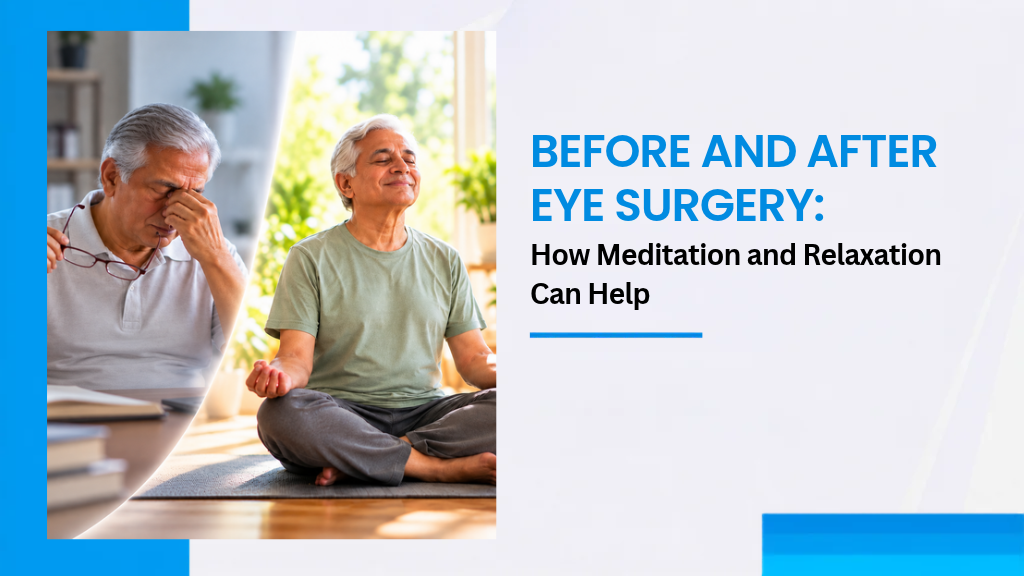
Undergoing surgery, especially eye surgery, can be an overwhelming experience for many patients. While physical preparation is essential, mental and emotional readiness also plays a critical role in recovery. In recent years, meditation and relaxation techniques have gained attention for their potential to improve surgical outcomes by reducing stress, anxiety, and even pain.
This blog post will explore how meditation and relaxation techniques can contribute to a smoother surgery experience and enhance post-operative recovery.
How Can Stress Affect Your Surgery Experience?
Feeling nervous before surgery is common. However, high levels of stress and anxiety can make the experience more difficult and may affect how you cope with discomfort.
Relaxation techniques can help you:
- Feel calmer before your procedure
- Reduce anxiety and worry
- Improve your ability to relax
- Manage discomfort during recovery
- Sleep more comfortably
These techniques should complement, rather than replace, the advice and treatment provided by your eye care team.
How Can Meditation Help Before Eye Surgery?
Meditation encourages you to focus on the present moment rather than worrying about your upcoming procedure.
Simple techniques such as mindfulness, deep breathing and guided imagery can be practised at home before your appointment.
Even a few minutes each day may help you develop a calming routine.
Mindfulness Meditation
Focus your attention on your breathing and the present moment. If your thoughts become focused on your surgery, gently bring your attention back to your breathing.
Deep Breathing
Take slow, comfortable breaths in through your nose and slowly breathe out. Repeat this for a few minutes whenever you feel anxious.
Guided Imagery
Picture yourself in a calm and comfortable environment. This can help shift your attention away from worries about your procedure.
Preparing Before Eye Surgery
Along with relaxation techniques, it is important to follow the specific instructions provided by your eye surgeon or clinic.
Depending on your treatment, you may receive advice about:
- Eating and drinking before your procedure
- Medicines you currently take
- Contact lenses
- Eye makeup
- Transport home after surgery
For example, can you eat before eye surgery? The answer depends on the procedure and whether anaesthesia or sedation is involved. Similarly, instructions about what I can eat before laser eye surgery may differ from those for other procedures.
If you are unsure, always check with your clinic rather than relying on general advice.
Meditation and Relaxation After Eye Surgery
Relaxation techniques can also be useful during recovery.
After surgery, you may continue with gentle breathing exercises or mindfulness if they feel comfortable. They may help you manage anxiety while you adjust to changes in your vision and recovery.
However, always prioritise your post-operative instructions. Use prescribed eye drops as directed, attend follow-up appointments and avoid rubbing or putting pressure on your eyes.
If you experience significant pain, increasing redness or sudden changes in vision, contact your eye care team promptly.
If you’re considering surgery and want to learn how meditation and relaxation techniques can enhance your outcome, contact us for more information. We support your journey to a smoother and more successful surgery.
Is it normal to feel anxious before eye surgery?
Yes. Feeling nervous before eye surgery is common. Learning about your procedure, discussing your concerns with your eye surgeon and practising relaxation techniques may help you feel more prepared.
Conclusion
Meditation and relaxation techniques can be simple ways to manage stress before and after eye surgery. Mindfulness, deep breathing and guided imagery may help you feel calmer and more prepared.
However, relaxation techniques should be used alongside—not instead of—the medical advice provided by your eye surgeon.
If you are considering eye surgery and have questions about preparation or recovery, speak to the team at Dr MM Eye Care for personalised guidance.
Author: Mr Manu Mathew, Consultant Ophthalmic Surgeon