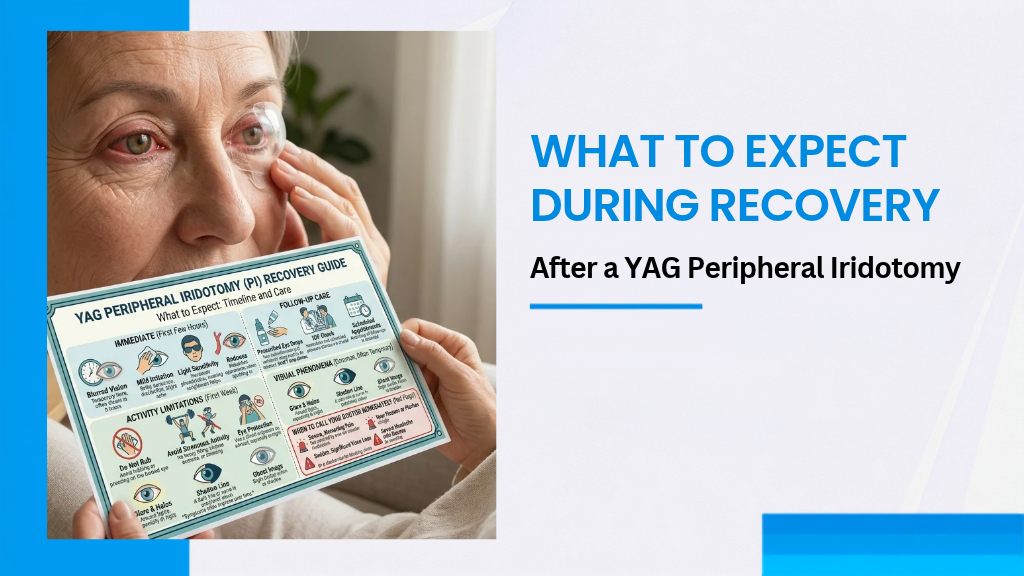
If you have recently had a YAG Peripheral Iridotomy, you may have questions about what to expect during recovery.
A YAG Peripheral Iridotomy is a laser treatment that creates a tiny opening in the peripheral iris. This helps fluid move more freely inside the eye and can reduce the risk of a sudden rise in eye pressure associated with angle-closure glaucoma.
The procedure is usually quick, but temporary changes in vision or mild discomfort can occur afterwards. Understanding the recovery process and knowing which symptoms to look out for can help you feel more comfortable.
What Happens Immediately After YAG Peripheral Iridotomy?
After the procedure, your vision may be blurred or hazy for several hours. This can happen because of the eye drops used before or after treatment and the bright light used during the procedure.
You may also notice:
- Mild eye discomfort or soreness
- A gritty or foreign-body sensation
- Light sensitivity
- Mild redness
- Temporary blurred or hazy vision
- A mild headache caused by some eye drops
These effects usually improve as the drops wear off and the eye settles.
Your eye pressure will usually be checked after treatment because it can temporarily increase following laser treatment.
As your vision may be blurred, arrange for someone to take you home. Do not drive until your vision has recovered and your ophthalmologist confirms it is safe.
YAG Peripheral Iridotomy Recovery Timeline
Recovery can vary from person to person. The following is a general guide, not a fixed recovery schedule.
Immediately After the Procedure
You may experience temporary blurred vision, mild irritation or light sensitivity. These symptoms may improve over the next few hours as the effects of the eye drops wear off.
During the First Few Days
Some patients continue to notice mild soreness, redness, a gritty feeling or sensitivity to bright light. These symptoms should gradually improve.
Follow your ophthalmologist’s advice about eye drops, daily activities and any temporary restrictions.
During the First Week
Many patients find that their discomfort and visual symptoms settle during the first few days. However, recovery time can differ depending on your eye health and individual response to treatment.
Contact your ophthalmologist if symptoms persist, worsen or concern you.
What Aftercare Is Recommended?
Your exact aftercare instructions will depend on your eye health and your ophthalmologist’s advice.
1. Use Your Eye Drops as Prescribed
You may be given anti-inflammatory or pressure-lowering eye drops following treatment.
Use them exactly as instructed. Do not stop prescribed medication or change how you use it without speaking to your ophthalmologist.
2. Avoid Rubbing Your Eyes
Try not to rub or press on the treated eye while it is settling.
If your eye feels dry or irritated, ask your ophthalmologist whether lubricating eye drops are suitable for you.
3. Protect Your Eyes From Bright Light
Your eyes may be more sensitive to bright light immediately after treatment. Wearing sunglasses outdoors can help you feel more comfortable.
4. Follow Advice About Normal Activities
You can usually return to many normal activities as your vision settles. Your ophthalmologist may recommend temporary restrictions depending on your individual circumstances.
Always follow the specific advice given by your treating eye specialist.
5. Attend Your Follow-Up Appointment
Follow-up care allows your ophthalmologist to check your eye pressure and make sure your eye is recovering as expected.
Keeping your appointment is important because a temporary rise in eye pressure can occur after treatment.
Common Symptoms After YAG Peripheral Iridotomy
Some temporary symptoms are common after treatment.
Mild Discomfort
You may experience mild soreness, irritation or a gritty feeling in the treated eye. This should gradually improve.
Blurred or Hazy Vision
Your vision may be blurred immediately after treatment. The effects of the eye drops and laser treatment can temporarily affect your vision. In many patients, vision improves later the same day or by the following day.
Light Sensitivity
Bright lights may feel uncomfortable for a short period. Sunglasses can help when you are outdoors.
Redness
The treated eye may appear slightly pink or red following the procedure. This should gradually settle.
Temporary Visual Disturbances
Some patients may notice glare, ghosting, shadows or other visual disturbances after a peripheral iridotomy. These symptoms may be temporary, although some visual symptoms can persist in a small proportion of patients.
Speak to your ophthalmologist if these symptoms are persistent, worsening or affecting your daily activities.
When Should You Contact Your Ophthalmologist?
Most patients recover without significant problems. However, seek medical advice promptly if you experience:
- Significant or worsening eye pain
- A sudden or significant reduction in vision
- Severe or increasing redness
- Persistent blurred or misty vision
- New or worsening visual symptoms
- Symptoms that are getting worse rather than improving
These symptoms can sometimes indicate a complication that needs assessment. If you are concerned about your eye after treatment, contact your ophthalmologist rather than waiting for symptoms to settle.
How Long Does It Take to Recover From YAG Peripheral Iridotomy?
Recovery varies between patients.
Your vision may be blurred for several hours after treatment, while mild irritation, redness or light sensitivity may take longer to settle. Many patients find that their vision returns to normal by later that day or the following morning.
Your ophthalmologist will advise you when it is safe to drive and return to your usual activities.
Can YAG Peripheral Iridotomy Improve Vision?
YAG Peripheral Iridotomy is primarily performed to improve the flow of fluid inside the eye and reduce the risk of angle-closure glaucoma. It is not primarily a procedure to improve eyesight.
If you continue to experience blurred vision after the expected recovery period, your ophthalmologist can assess whether another eye condition or another cause is affecting your vision.
YAG Peripheral Iridotomy vs YAG Laser Capsulotomy
The term YAG laser treatment can refer to different procedures, so it is important to understand the difference.
YAG Peripheral Iridotomy creates a small opening in the iris to help fluid circulate more freely within the eye. It is commonly used to treat or reduce the risk associated with angle-closure glaucoma.
YAG Laser Capsulotomy is a different procedure. It is generally performed after cataract surgery when the capsule behind the artificial lens becomes cloudy. The laser creates an opening in the cloudy capsule to allow light to pass through more clearly.
If you have been told that you need YAG treatment after cataract surgery, your ophthalmologist can explain which type of YAG procedure is appropriate for you.
Why Is Follow-Up Important After YAG Peripheral Iridotomy?
Although YAG Peripheral Iridotomy is generally a straightforward outpatient procedure, follow-up remains an important part of treatment.
Your ophthalmologist may check:
- Your eye pressure
- The treated area of the iris
- Your vision
- Any inflammation or signs of a complication
- Whether further treatment is required
Following your individual treatment plan helps your ophthalmologist monitor your recovery and manage any concerns early.
Consultant-Led Eye Care at Dr MM Eye Care
Every patient’s eyes and medical history are different. A detailed assessment helps your ophthalmologist understand your condition and recommend the most appropriate treatment.
At Dr MM Eye Care, Mr Manu Mathew is a Consultant Ophthalmic Surgeon providing personalised eye care and treatment.
If you have been advised to have a YAG Peripheral Iridotomy, a consultation can help you understand why the treatment has been recommended, what to expect during the procedure and how your recovery will be monitored.
Learn more about Dr MM Eye Care and its consultant-led approach to eye care.
Take the Next Step
If you have been advised to have a YAG Peripheral Iridotomy or have concerns about your eye pressure, speaking with an experienced ophthalmologist can help you understand your treatment options.
Visit Dr MM Eye Care to learn more about the practice and arrange an assessment.
Conclusion
Recovery after a YAG Peripheral Iridotomy is usually straightforward. Temporary blurred vision, mild discomfort, redness and light sensitivity can occur while the eye settles.
Following your ophthalmologist’s instructions, using prescribed eye drops and attending your follow-up appointment are important parts of your recovery.
If you experience significant pain, worsening redness or a sudden change in vision, contact your eye specialist promptly.
If you have been advised to have a YAG Peripheral Iridotomy or would like to discuss your eye health, visit Dr MM Eye Care to learn more about consultant-led eye care.