
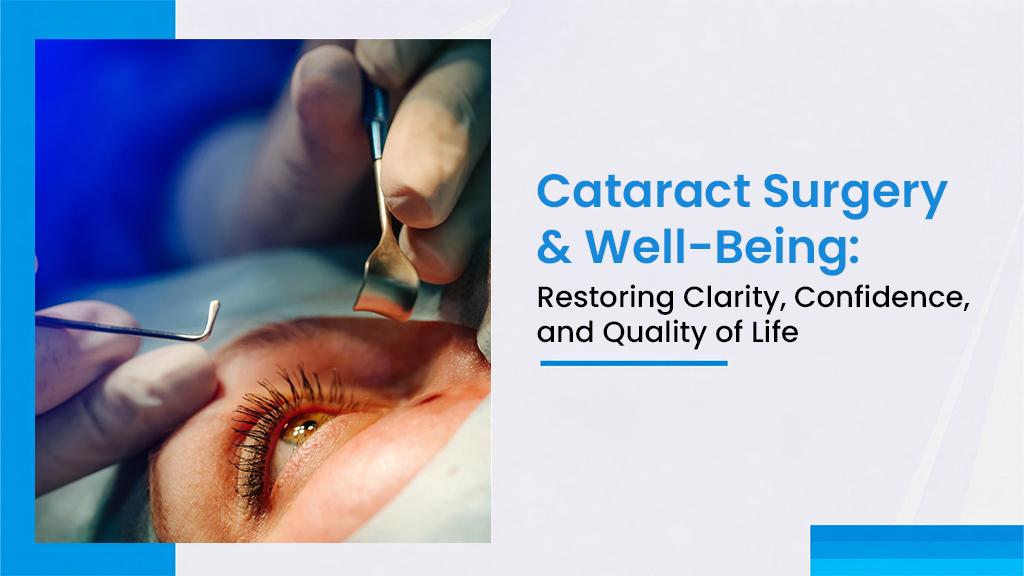
Cataracts are one of the most common causes of visual impairment worldwide, particularly as we age. While many people associate cataracts simply with “blurred vision,” their impact extends far beyond eyesight.
Reduced visual clarity can affect confidence, independence, mobility, and overall well-being. Everyday tasks that were once effortless reading, driving, recognising faces can gradually become challenging.
At Dr MM Eye Care, we believe cataract surgery is not just a procedure to restore vision, but a transformative step toward improving quality of life.
What Are Cataracts?
A cataract occurs when the natural lens of the eye becomes cloudy, reducing the amount and quality of light reaching the retina.
This leads to progressive visual changes, including:
- Blurred or cloudy vision
- Increased sensitivity to light
- Difficulty seeing at night
- Faded or dull colours
- Frequent changes in glasses prescription
Cataracts typically develop gradually, which means many patients adapt to declining vision without realising the full extent of its impact.
The Hidden Impact of Cataracts on Well-Being
While cataracts affect vision directly, their broader effects on daily life are often under estimated.
1. Reduced Independence
As vision declines:
- Driving may become unsafe or restricted
- Reading and managing daily tasks becomes difficult
- Reliance on others increases
2. Increased Risk of Falls
Cataracts affect:
- Depth perception
- Contrast sensitivity
- Peripheral awareness
This significantly increases the risk of trips and falls, particularly in older adults.
3. Social Withdrawal
Difficulty recognising faces or navigating environments can lead to:
- Reduced participation in social activities
- Loss of confidence in public forum
- Feelings of isolation
4. Mental and Emotional Well-Being
Visual impairment can contribute to:
- Frustration and fatigue
- Reduced sense of independence
- Lower overall quality of life
These effects highlight that cataracts are not just a visual issue they are a functional and well-being concern.
Cataract Surgery: More Than Vision Correction
Cataract surgery is one of the most effective and commonly performed procedures in modern medicine.
The procedure involves:
- Removing the cloudy natural lens
- Replacing it with a clear artificial intraocular lens (IOL)
The result is improved clarity, contrast, and overall visual function.
How Cataract Surgery Improves Well-Being
1. Restored Visual Clarity
Patients often notice:
- Sharper, brighter vision
- Improved colour perception
- Better ability to see in low light
2. Improved Confidence and Independence
After surgery:
- Many patients return to driving
- Daily activities become easier
- Confidence in movement and interaction improves
3. Reduced Risk of Falls
Improved vision leads to:
- Better depth perception
- Increased environmental awareness
- Safer mobility
4. Enhanced Quality of Life
Patients frequently report:
- Greater enjoyment of hobbies
- Increased social engagement
- Improved overall well-being
The benefits extend beyond eyesight—they positively impact how you live and function every day.
Understanding the Procedure
For many patients, uncertainty about surgery can create hesitation.
What to Expect
- The procedure typically takes 15–20 minutes
- It is performed under local anaesthetic
- You remain awake but comfortable
- Most patients go home the same day
Vision often begins to improve within a few days, with continued stabilisation over the following weeks.
Recovery and Visual Adaptation
Early Recovery
- Mild discomfort or irritation for a short period
- Gradual improvement in clarity
- Return to most daily activities within a few days
Longer-Term Adaptation
- The brain adjusts to improved visual input
- Vision continues to stabilise over several weeks
- Final outcomes depend on lens choice and eye health
Choosing the Right Intraocular Lens
Modern cataract surgery offers a range of lens options tailored to individual needs.
Common Options
- Monofocal lenses – clear vision at one distance
- Toric lenses – correct astigmatism
- Multifocal or trifocal lenses – provide vision at multiple distances
The choice depends on:
- Your lifestyle
- Visual priorities (reading, driving, digital work)
- Overall eye health
Consultant-Led Care at Dr MM Eye Care
The quality of your outcome depends not just on the procedure, but on precision and personalisation.
At Dr MM Eye Care:
- You are assessed, treated, and followed up by the same consultant
- Lens selection is tailored to your lifestyle and visual goals
- Advanced diagnostics ensure accurate planning and outcomes
This approach provides:
- Greater consistency in care
- More personalised decision-making
- Improved long-term satisfaction
Safety and Risk Considerations
Cataract surgery is widely regarded as a safe procedure, but like all surgery, it carries some risks. These may include:
- Infection (rare)
- Inflammation
- Temporary visual disturbances
- Posterior capsule opacification (treatable with laser)
A detailed consultation ensures you understand these factors and receive appropriate guidance.
When Should You Consider Cataract Surgery?
You may benefit from surgery if:
- Your vision is affecting daily activities
- You are struggling with driving, reading, or screen use
- Glasses no longer provide adequate clarity
- You feel your independence is being impacted
The decision is not based on age—it is based on how your vision affects your quality of life.
The Broader Perspective: Vision and Well-Being
Vision plays a central role in:
- Physical safety and mobility
- Cognitive function and confidence
- Emotional well-being
- Social engagement
Restoring vision through cataract surgery often leads to improvements across all these areas.
Take the Next Step
If cataracts are affecting your daily life: Book a consultant-led assessment
You will receive:
- A comprehensive evaluation
- Clear explanation of your options
- A personalised treatment plan
Conclusion
Cataract surgery is more than a clinical intervention it is a pathway to improved independence, confidence, and overall well-being.
At Dr MM Eye Care, our focus is not just on restoring sight, but on helping you live more comfortably, safely, and confidently through better vision.