
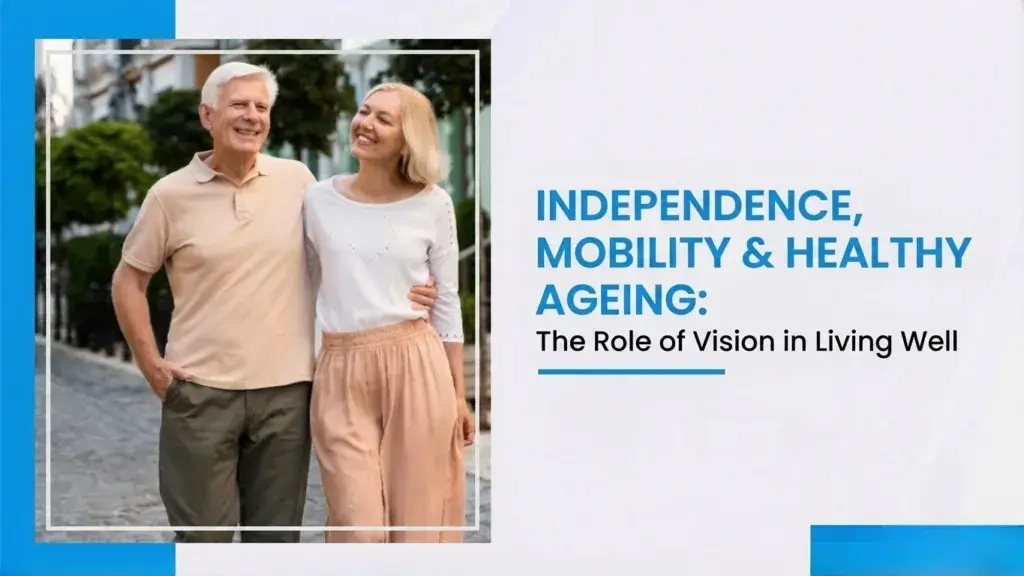
Healthy ageing is not just about longevity it is about maintaining independence, confidence, and the ability to engage fully in daily life. One of the most important, yet often overlooked, factors in this process is vision.
Clear and stable vision plays a critical role in how we move, interact, and function. As visual quality declines, it can gradually affect mobility, safety, and overall well-being.
At Dr MM Eye Care, we recognise that preserving vision is essential to supporting independence and quality of life as we age.
The Connection Between Vision and Mobility
Vision is fundamental to how we navigate the world. It helps us:
- Judge distances and depth
- Detect obstacles and changes in terrain
- Maintain balance and coordination
- Respond quickly to environmental changes
When vision is impaired, these processes become less reliable, increasing the risk of accidents and reducing confidence in movement.
How Vision Changes with Age
As part of the natural ageing process, several changes can affect visual function:
1. Reduced Contrast Sensitivity
- Difficulty distinguishing objects from backgrounds
- Increased challenges in low-light conditions
2. Slower Visual Processing
- Delayed reaction to moving objects
- Increased time needed to adapt to changes in lighting
3. Increased Glare Sensitivity
- Difficulty with bright lights or oncoming headlights
- Reduced comfort during night driving
4. Common Age-Related Eye Conditions
- Cataracts
- Presbyopia (age-related near vision changes)
- Glaucoma
- Macular degeneration
These changes may develop gradually, making them easy to overlook until they begin to impact daily life.
The Impact on Independence
1. Difficulty with Daily Activities
Reduced vision can make it harder to:
- Read labels and instructions
- Manage medications
- Perform household tasks
2. Loss of Driving Confidence
Vision changes may affect:
- Ability to meet legal driving standards
- Confidence in navigating traffic
- Confidence in navigating traffic
- Comfort during night driving
3. Increased Dependence on Others
As vision declines:
- Assistance may be needed for routine tasks
- Independence may be reduced
- Confidence may decrease
4. Social and Emotional Well-Being
Visual impairment can lead to:
- Reduced social engagement
- Feelings of isolation
- Lower overall quality of life
Maintaining good vision is key to preserving both physical independence and emotional well-being.
Vision and Fall Risk
Falls are a major concern in older adults, and vision plays a significant role.
How Vision Affects Safety
- Reduced depth perception makes it harder to judge steps and distances
- Poor contrast sensitivity increases the risk of missing obstacles
- Peripheral vision loss limits awareness of surroundings Improving vision can:
- Enhance balance and coordination
- Reduce fall risk
- Increase confidence in movement
Supporting Healthy Ageing Through Better Vision
1. Regular Eye Examinations
Routine assessments help:
- Detect age-related changes early
- Monitor existing conditions
- Maintain optimal vision
2. Appropriate Vision Correction
- Updated glasses or lenses improve clarity
- Tailored solutions address specific needs
- Regular adjustments ensure continued effectiveness
3. Managing Eye Conditions
Early treatment of conditions such as cataracts or glaucoma can:
- Preserve visual function
- Prevent further deterioration
- Improve quality of life
Cataract Surgery and Independence
Cataracts are one of the most common causes of reduced vision in older adults and one of the most treatable.
Benefits of Cataract Surgery
- Improved clarity and brightness
- Better depth perception
- Reduced glare
- Enhanced ability to perform daily activities
Many patients experience:
- Increased confidence in mobility
- Greater independence
- Improved overall well-being
Advanced Vision Solutions for Ageing Eyes
Modern ophthalmology offers solutions tailored to the needs of ageing patients.
Lens-Based Procedures
- Replace the natural lens with a clear artificial lens
- Address both cataracts and refractive errors
- Provide improved visual range
Personalised Treatment Planning
Each patient’s needs are different, depending on:
- Lifestyle
- Health status
- Visual priorities
Consultant-Led Care at Dr MM Eye Care
Achieving the best outcomes requires careful planning and continuity of care. At Dr MM Eye Care:
- You are assessed, treated, and followed up by the same consultant
- Your care is tailored to your individual needs and lifestyle
- Advanced diagnostics ensure precision and safety
This approach supports:
- Better clinical outcomes
- Greater patient confidence
- Long-term visual stability
Maintaining Mobility and Confidence
Improved vision supports:
- Safer walking and navigation
- Continued participation in activities
- Confidence in both indoor and outdoor environments
Vision plays a central role in maintaining an active and independent lifestyle.
When Should You Seek an Eye Assessment?
You should consider an evaluation if:
- You notice changes in vision or clarity
- You feel less confident when walking or driving
- You experience increased glare or difficulty in low light
- You have been diagnosed with an eye condition
Early intervention helps maintain independence and prevent complications.
A Holistic Approach to Healthy Ageing
At Dr MM Eye Care, we take a comprehensive approach to eye health. Our focus is on:
- Preserving vision
- Supporting mobility and independence
- Enhancing overall well-being
Take the Next Step
If your vision is affecting your independence or daily life: Book a consultant-led assessment
You will receive:
- A detailed evaluation
- Personalised recommendations
- A plan to support your long-term eye health
Conclusion
Vision is a key factor in maintaining independence, mobility, and confidence as we age. By addressing visual changes early and using appropriate treatments, it is possible to preserve both function and quality of life.
At Dr MM Eye Care, we are committed to helping you see clearly, move confidently, and live independently.