
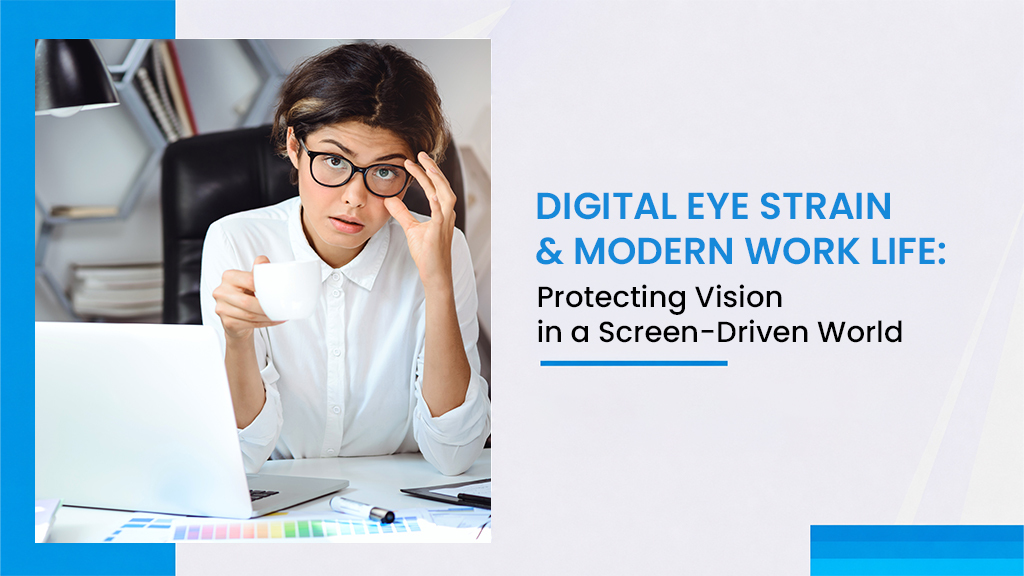
Modern work life is increasingly screen-based. Whether we are working on a computer, attending virtual meetings, or using smartphones throughout the day, our eyes are under constant demand.
While digital devices have improved efficiency and connectivity, they have also led to a rise in digital eye strain, commonly referred to as computer vision syndrome.
For many individuals, symptoms such as tired eyes, headaches, and blurred vision are now part of daily life. At Dr MM Eye Care, we recognise that managing digital eye strain is essential not just for comfort, but for maintaining productivity, focus, and overall well-being.
What Is Digital Eye Strain?
Digital eye strain refers to a group of symptoms caused by prolonged use of screens. Unlike printed material, digital screens present unique challenges:
- Constant pixel refresh
- Glare and reflections
- Prolonged near-focus demand
These factors place additional strain on the visual system.
Common Symptoms of Digital Eye Strain
You may be experiencing digital eye strain if you notice:
- Tired or heavy eyes
- Dryness, irritation, or burning sensation
- Blurred or fluctuating vision
- Headaches, especially around the eyes
- Difficulty focusing between distances
- Neck and shoulder discomfort
These symptoms often worsen toward the end of the day and may become more noticeable with prolonged screen use.
Why Digital Screens Strain the Eyes
1. Reduced Blink Rate
When focusing on screens:
- Blink rate can drop significantly
- Tears evaporate more quickly
- This leads to dryness and irritation
2. Continuous Focusing Effort
The eye’s focusing muscles remain engaged for extended periods, causing:
- Fatigue
- Difficulty shifting focus
- Temporary blurred vision
3. Glare and Contrast Issues
Reflections and screen brightness can:
- Increase visual stress
- Reduce clarity
- Require additional effort to maintain focus
4. Poor Ergonomics
Improper workstation setup can contribute to:
- Eye strain
- Postural discomfort
- Neck and shoulder pain
The Impact on Well-Being and Productivity
Digital eye strain does not just affect comfort—it can impact overall performance.
Effects on Daily Life
- Reduced concentration and focus
- Increased mental fatigue
- Lower productivity
- Discomfort during prolonged work sessions
Over time, these effects can influence both professional performance and personal well-being.
The 20-20-20 Rule: A Simple but Effective Strategy
One of the most effective ways to reduce eye strain is the 20-20-20 rule:
- Every 20 minutes
- Look at something 20 feet away
- For at least 20 seconds This helps:
- Relax the focusing muscles
- Encourage blinking
- Reduce cumulative strain
Practical Strategies to Reduce Digital Eye Strain
1. Optimise Your Screen Setup
- Position the screen about 25 inches away
- Keep it slightly below eye level
- Use appropriate font size and contrast
2. Adjust Lighting
- Avoid glare from windows or overhead lights
- Use soft, ambient lighting
- Consider anti-glare screens if needed
3. Blink More Frequently
Make a conscious effort to:
- Blink fully and regularly
- Maintain a stable tear film
- Prevent dryness
4. Take Regular Breaks
In addition to the 20-20-20 rule:
- Step away from screens periodically
- Stretch and relax your eyes
5. Stay Hydrated
Hydration supports:
- Tear production
- Overall ocular comfort
Treatment Options for Persistent Symptoms
If symptoms persist despite lifestyle adjustments, further evaluation may be required.
Possible Interventions
- Lubricating eye drops for dryness
- Computer glasses for intermediate distance
- Updated prescription if needed
Dry eye treatment plans
A comprehensive eye examination can identify underlying issues contributing to your symptoms.
When Should You Seek Professional Advice?
You should consider an eye assessment if:
- Symptoms persist despite adjustments
- You experience frequent headaches
- Vision becomes blurred or fluctuates
- Discomfort interferes with work or daily activities
Early evaluation allows for targeted treatment and improved comfort.
Consultant-Led Care at Dr MM Eye Care
Managing digital eye strain effectively requires a personalised approach. At Dr MM Eye Care:
- Your visual habits and work environment are carefully assessed
- Underlying causes such as dry eye or refractive error are identified
- Treatment plans are tailored to your specific needs This ensures:
- More accurate diagnosis
- Effective symptom management
- Long-term improvement in comfort
Long-Term Eye Health in a Digital World
Digital devices are an integral part of modern life, but their impact can be managed. Maintaining good visual health involves:
- Regular eye examinations
- Awareness of symptoms
- Early intervention when needed
The Broader Perspective: Vision and Well-Being
Comfortable vision supports:
- Sustained focus and productivity
- Reduced fatigue
- Improved quality of life
Managing digital eye strain is not just about reducing discomfort—it is about maintaining efficiency and well-being in a screen-driven world.
Take the Next Step
If you are experiencing symptoms of digital eye strain: Book a consultant-led assessment
You will receive:
- A detailed evaluation
- Personalised recommendations
- A plan to improve your visual comfort
Conclusion
Digital eye strain is a common but manageable condition. With the right strategies and professional guidance, it is possible to reduce symptoms and maintain comfortable, efficient vision.
At Dr MM Eye Care, we focus on helping you adapt to modern visual demands while protecting your long-term eye health and well-being.