Lens replacement surgery is an advanced vision correction procedure designed to reduce or eliminate dependence on glasses, particularly for patients over the age of 45 experiencing presbyopia or high refractive error. It is increasingly chosen by people who want clearer, more predictable vision for everyday life. Also known as Refractive Lens Exchange (RLE), the procedure …

Lens replacement surgery is an advanced vision correction procedure designed to reduce or
eliminate dependence on glasses, particularly for patients over the age of 45 experiencing
presbyopia or high refractive error. It is increasingly chosen by people who want clearer,
more predictable vision for everyday life.
Also known as Refractive Lens Exchange (RLE), the procedure involves removing the eye’s
natural lens and replacing it with a carefully selected artificial intraocular lens (IOL). Unlike
laser vision correction, which reshapes the cornea, lens replacement surgery corrects vision
at the lens level.
The aim is not only to correct vision but to provide long term stability and reduce future risk
of cataract development.
For many individuals seeking a long-term solution rather than ongoing spectacle changes,
lens replacement surgery offers clarity, stability and freedom from future lens ageing
changes. If you are considering lens replacement surgery in the UK, it is important to
understand how it works, who it suits best and what realistic outcomes you can expect.
What Is Lens Replacement Surgery?
Lens replacement surgery, sometimes referred to as eye lens replacement surgery or
replacement lens surgery, is a procedure that replaces the eye’s natural lens with a synthetic
intraocular lens.
The natural lens sits behind the iris and helps focus light onto the retina. As we age, the lens
becomes less flexible and may also become cloudy. In refractive lens exchange, the lens is removed before significant cataract formation and replaced with a clear artificial lens designed to correct refractive errors.
The procedure is technically very similar to modern cataract surgery. The key difference is that
it is performed primarily for vision correction rather than cataract removal.
Because the natural lens is replaced, patients cannot later develop cataracts in that eye.
Why Do People Choose Lens Replacement Surgery?
Lens replacement surgery is often positioned as a lifestyle vision correction procedure. It is
commonly chosen by individuals who:
➢ are over 45 and developing presbyopia
➢ want independence from reading glasses
➢ have high long sightedness (e.g. +4.00D, +5.00D or higher).
➢ have significant astigmatism
➢ Are not suitable candidates for laser vision correction
➢ want a long-term solution rather than repeated prescription updates.
For active individuals who drive at night, use digital devices extensively, travel frequently or
enjoy sport, lens replacement surgery can offer more predictable stability compared with
corneal laser procedures in certain prescriptions.
Who Is Suitable for Lens Replacement Surgery?
Suitability is determined following a detailed consultant-led assessment including:
o Optical biometry (lens power calculation)
o Corneal topography
o Retinal examination
o Macular assessment
o Ocular health screening
Typical Good Candidates
1. Patients over 45 with presbyopia
The natural lens loses flexibility from the mid-40s onwards. Lens replacement surgery can
restore distance vision and significantly reduce reading dependence, depending on lens
choice.
2. Patients with high hyperopia
Long sighted prescriptions (often +3.00D and above) often achieve excellent accuracy due to
precise lens power selection.
3. Patients with early lens changes
If subtle early cataract changes are present, RLE can address refractive correction while
preventing future cataract development.
4. Patients unsuitable for laser vision correction
Those with thin corneas, irregular shape or very high prescriptions may achieve safer
outcomes with lens-based correction.
Who May Not Be Suitable?
Not everyone is an ideal candidate. Careful assessment is essential.
Lens replacement surgery may not be recommended for:
o Patients with significant retinal disease
o Individuals with uncontrolled glaucoma
o Younger patients with strong natural accommodation
o Patients with unrealistic expectations about perfect vision at all distances
A balanced discussion of visual goals and limitations is essential before proceedin
What Types of Intraocular Lenses Are Used?
The artificial lens selected determines visual outcome. Careful lens counselling is one of the
most important aspects of the procedure. The three most commonly used intraocular lenses
are:
Monofocal Lenses
These provide clear vision at a single focal point, usually distance. Reading glasses are
typically required for near tasks.
Multifocal Lenses
These are designed to provide focus at multiple distances and can reduce dependence on
glasses for both near and distance tasks. Many patients reduce glasses dependence
significantly.
However, it is important to understand potential trade-offs:
➢ Mild halos around lights
➢ Reduced contrast in low lighting
➢ A short neuroadaptation period as the brain adjusts
Most patients adapt well, but expectations must be realistic
Toric Lenses
These correct astigmatism in addition to distance vision and improve overall sharpness in
patients with moderate to high cylindrical prescriptions.
Lens selection is personalised based on:
o Lifestyle
o Night driving needs
o Occupation
o Tolerance for potential halos
o Desire for spectacle independence
What Happens During the Procedure?
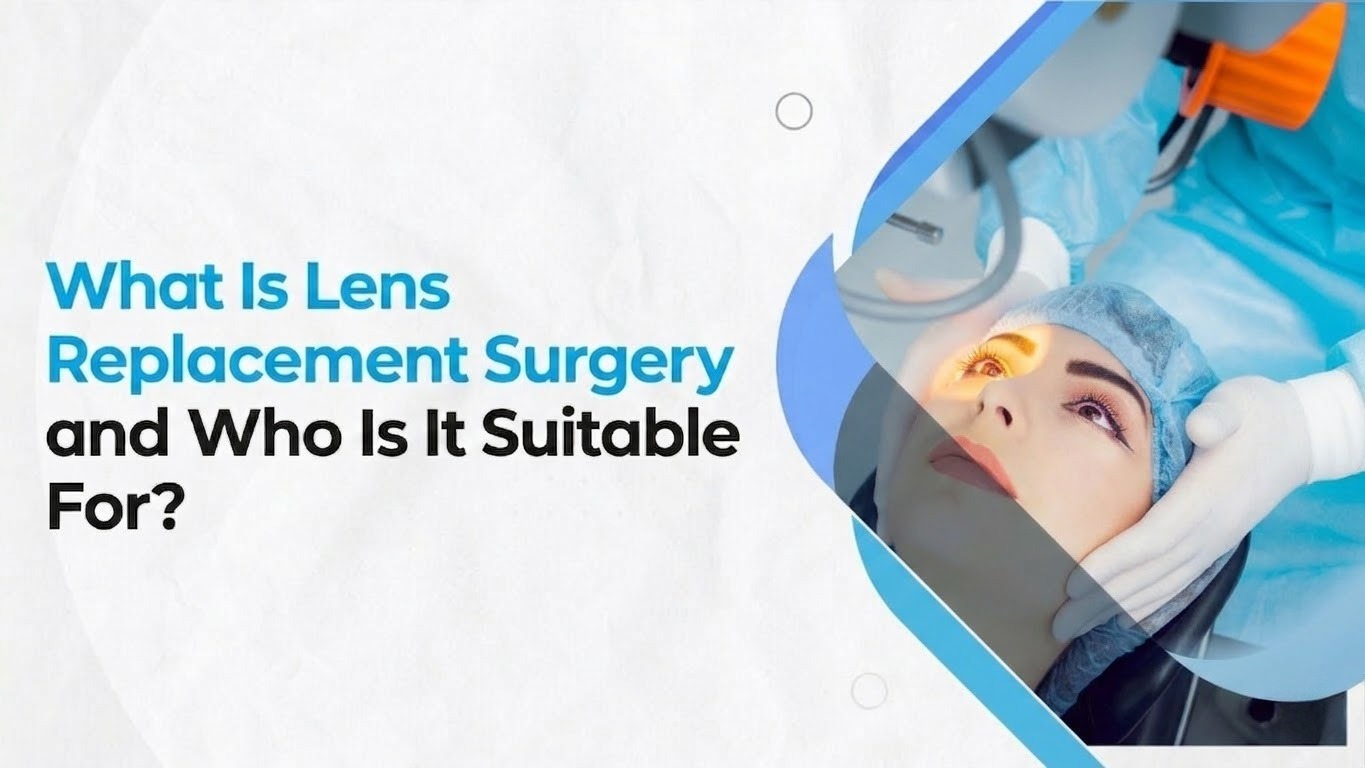
Lens replacement surgery is performed as a day case procedure under local anaesthetic.
A small incision is made at the edge of the cornea. The natural lens is gently broken up using
ultrasound and removed. The artificial lens is then inserted into the capsular bag where the
natural lens previously sat.
The incision is self-sealing and stitches are rarely required.
The procedure usually takes around 20 to 30 minutes per eye.
What Is Recovery Like?
Most patients notice improved vision within a few days. However, vision can fluctuate
slightly in the early stages.
Typical recovery expectations include:
➢ Mild irritation or scratchiness for 2-3 days
➢ Use of prescribed anti inflammatory and antibiotic drops for several weeks
➢ Avoiding heavy lifting and swimming for a short period
➢ Light activities resumed within a few days
➢ Driving often possible within one week (subject to vision standards)
➢ Gradual stabilisation of vision over several weeks
Full healing continues internally for several weeks even though vision may feel clear earlier.
What Are the Risks?
Lens replacement surgery has a strong safety profile when performed with modern
techniques.
All surgical procedures carry risks, although serious complications are uncommon.
Potential risks include:
o Infection (rare)
o Inflammation
o Retinal detachment
o Raised intraocular pressure
o Posterior capsule opacification
According to data from the National Ophthalmology Database, modern lens-based
procedures demonstrate high success and low complication rates.
Patients should have a full discussion before proceeding about individual risk depending on
prescription, eye health and age.
What Results Can You Realistically Expect?
Most suitable patients achieve:
❖ Clear distance vision
❖ Significant reduction in glasses dependence
❖ Stable long-term correction
❖ Freedom from future cataract development
Some patients may still require glasses for very specific tasks, particularly if monofocal lenses
are chosen.
Understanding visual trade-offs before surgery is essential for long-term satisfaction.
How Much Does Lens Replacement Surgery Cost?
Lens replacement surgery cost in the UK varies depending on several factors:
✓ Type of intraocular lens selected
✓ Complexity of prescription
✓ Diagnostic testing required
✓ Post operative care
Premium multifocal or toric lenses generally increase overall cost due to advanced optics
and more detailed pre-operative measurements.
Frequently Asked Questions
Is lens replacement surgery the same as cataract surgery?
The surgical technique is very similar. However, lens replacement surgery is performed
primarily for vision correction rather than for removing an advanced cataract.
How long does eye lens replacement surgery take?
The procedure usually takes 20 to 30 minutes per eye and is performed as a day case.
Will I still need glasses after replacement lens surgery?
This depends on the type of intraocular lens selected and your lifestyle needs. Monofocal
lenses usually require reading glasses. Multifocal or toric lenses significantly reduce
dependence on glasses, though some patients may still need them for specific tasks.
Is the procedure painful?
The procedure is performed under local anaesthetic. Most patients report minimal discomfort.
What is the recovery time after lens replacement surgery?
Most patients resume normal light activities within a few days. Vision continues to stabilise over several weeks.
How long do the results last?
The lens implant is permanent and does not wear out.
Book a Consultation
It’s easy and free!
Tags: